
History
More than two decades of stewardship.
The Friends of Lafayette Park began in 1999. Successive generations of neighbors have shaped the park through master plans, capital projects, gardens, and gatherings. This page preserves that record.
History of the park
1928 — twelve acres become parkland
In 1928 the District of Columbia purchased twelve acres of rolling parkland — roughly bounded by Broad Branch Road, Northampton, 33rd, and Quesada Streets — to build Lafayette School. Part of the land had been a farm owned by the late Mr. Horace Jones, whose original 1859 farmhouse still stands on Quesada Street. Behind the house the Jones cattle once grazed in the area where children play in the tot lot today.
Much of the land, however, was acquired from African-American families who owned several small houses and farm plots near Broad Branch Road and Oliver Street. The families farmed the land for nearly 80 years, until 1928, when the city acquired it to build the park and Lafayette Elementary School. Many were descendants of Captain George Pointer, who was born enslaved in 1773, purchased his own freedom, and worked for more than 40 years as a supervising engineer on what became the C&O Canal. They were among the first freed African-Americans to become landowners in upper Northwest DC.
The houses were torn down to make way for the first school — a collapsible frame building. When the brick school opened in 1931, the land around it was woods, a barn, and just a few houses on 33rd Street, a farm-like setting that delighted the children. During World War II, victory gardens took advantage of the sunny south side.
These remembrances of local residents were summarized by Sharon Moran in Origins II, published by Neighborhood Planning Council #2 and #3 in 1976.
Founding
1999 — Friends of Lafayette Park forms
In 1999 a group of Chevy Chase DC neighbors organized as Friends of Lafayette Park (FOLP), a 501(c)(3) nonprofit dedicated to preserving and improving the park. Beth Pierce and Jeff Stoiber were among the founders. From the start, the organization partnered with DC Parks and Recreation to do the work the city budget alone could not.
Phase I master plan
1999–2009 — the first decade of goals
When FOLP was founded, the directors worked with the community to develop the organization's first phase of goals — the Phase I Master Plan. Those goals were completed in the first ten years and shaped most of what visitors see today: the perimeter gardens, playgrounds, the former tot lot, the amphitheater, upgraded tennis courts and ball fields, benches, picnic tables, and the Daisy Fountain.
Park-perimeter gardening began earlier still: in the early 1990s, before FOLP existed, neighbor Judy Goodman organized a small group of gardeners to rehabilitate the Quesada Street corner and plant the hill at Quesada and Broad Branch with azaleas. American Plant Food donated plants; local Boy Scouts helped prepare the site; garden designer Jane Berger donated plans. When FOLP formed, the garden group folded into the organization.
Phase II master plan
2009 — tenth-anniversary plan
In commemoration of FOLP's tenth anniversary in 2009, the board developed a Phase II master plan. The capital improvements section called for replacing all walkways in the park, new upper- park lighting to match the lower park, a rubberized running track around the baseball fields, additional picnic tables, a renovated school gym, a new recreation center, and an extension of the green water irrigation system to the Broad Branch Road garden.
The maintenance section called for correcting drainage and erosion problems, repairing the earthen wall between the spray park and the play area, grading and seeding the baseball fields, and resurfacing the tennis courts (last color-coated in 2003). Many — though not all — of these items have since been addressed.
The complete Phase II goals list is preserved in the archive:FOLP Goals.
2011
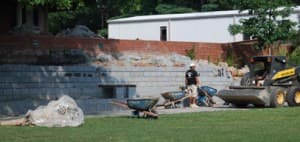
Amphitheater repair project
The Friends of Lafayette-Pointer Park played a vital role in getting extensive repairs done to the amphitheater in August 2011, with the rehabilitation completed at the start of the 2011–2012 school year. FOLP and the Lafayette Home and School Association (HSA) paid for and managed the project, funded by the generous support of neighbors and Lafayette school families.
The amphitheater — adjacent to the ball field and originally built in 2001 — had fallen into disrepair from heavy use. The work restored it to its place as a wonderful asset for the park.
2017
Merger with Friends of Lafayette Recreation Center and Park
In 2016 a parallel organization, the Friends of Lafayette Recreation Center and Park (FoLRAP), was founded by Elizabeth Engel and Patty Myler to focus on the recreation center redevelopment then under discussion with DPR. In 2017 FOLP and FoLRAP merged, consolidating volunteer effort under a single 501(c)(3) and broadening the board's remit to cover both the park grounds and the rec center building.
2020
Park renamed Lafayette-Pointer Park
In 2020, after extensive advocacy and conversations with descendants of Captain George Pointer (1773–1862) — who was born enslaved, purchased his freedom at age 19, and worked as an engineer on the Chesapeake & Ohio Canal — the District renamed the park Lafayette-Pointer Park. The land had been home to African-American families including the descendants of George Pointer from the 1830s until 1928 when their homes were taken by eminent domain to build Lafayette Elementary School and Lafayette Park.
Beginning in 2018, Historic Chevy Chase DC researched the park's history, launched a petition in 2019 to rename the park, and located and contacted a number of Pointer family descendants. The DC Council approved the name change in late 2020. A sign near the recreation center now offers additional information, maps, and historic drawings.
2021
New recreation center opens
The new Lafayette-Pointer Recreation Center opened in 2021, replacing the older structure. FOLP provided community input to the city throughout the design and construction process — work that began with the Phase II master plan and continued through the merger with FoLRAP.
A new master plan
2026 — the next chapter
FOLP is currently developing a new master plan for the park, the first since 2009. The work is in progress; this page will be updated as goals firm up. In the meantime, the historical record of past plans, projects, and the people who carried them out is preserved in the archive.
Past projects & accomplishments
What the FOLP has built and rebuilt.
Over more than two decades of volunteer work, the FOLP has supported the addition of gardens (particularly on the park's perimeter), playgrounds, the former tot lot, the amphitheater, the gazebo, upgraded tennis courts and ball fields, and added benches, picnic tables, and much more. The FOLP provided input to the city for the renovation of the park playground in 2015 and for the new recreation center in 2021, and continues to work with the city on an improved stormwater management plan to address erosion and other park improvements.
The original write-ups are preserved in the archive. Below is the landing-page narrative of accomplishments and the gardening history.
June 2026 — most recent
The bear carving
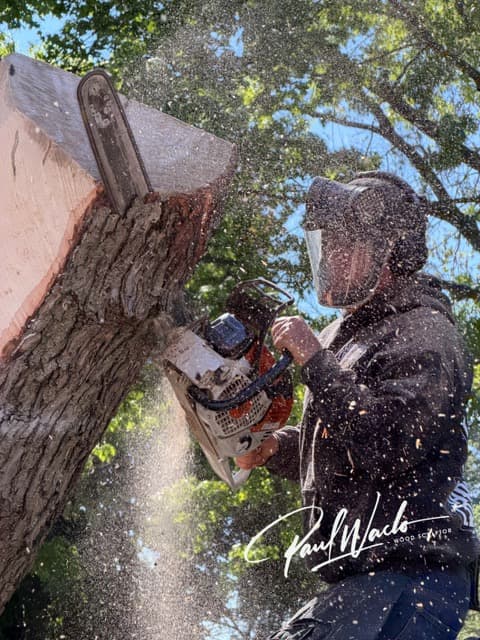
Thanks to generous community members, FOLP reached its fundraising goal and commissioned artist Paul Waclo to transform a storm-damaged 250-year-old oak into a sculpture of a bear — the longtime mascot of Lafayette Elementary School — the week of June 8–12, 2026.
Read the story →Park enhancements (full list)
The Gardens:
The Friends of Lafayette-Pointer Park maintain gardens in and along the perimeter of the park, including: gardens along Broad Branch Road, a pollinator garden on Quesada Street, gardens by the tennis courts, along 33rd Street, and by Oliver Street.
A Garden Treat!
John Kelly’s column in the Washington Post of Tuesday, November 1, 2011, has a nice mention about a memorial for a gardener named Ted Farber, who had an affection for tulips. In his honor bulbs are being planted around the DC metro area. His daughter, Sandy, the coordinator of UDC’s Master Gardener program has distributed 2800 bulbs to be planted in many places around the city. Thanks to Maggie Heyward, who is finishing her Master Gardener volunteer hours, the Friends of Lafayette-Pointer Park have 300 small Bronze Charm tulips being planted in our park along 33rd Street near the sidewalk. FOLP and the garden group really appreciates being included in this lovely memorial.
https://nxqpubstzsjocyca.public.blob.vercel-storage.com/archive/2013/10/tulips.jpg
Amphitheater Repair Project
The Friends of Lafayette-Pointer Park (FOLP) played a vital roll in getting extensive repairs done to the amphitheater in August 2011. The rehabilitation project was completed at the beginning of the school year 2011-2012. The FOLP and the Lafayette Home and School Association (HSA) paid for and managed the project – through funds from the generous support of neighbors and Lafayette school families. The amphitheater, which is adjacent to the ball field and originally built in 2001, had fallen into disrepair from heavy use. It has now regained its position as a wonderful asset for the park.
https://nxqpubstzsjocyca.public.blob.vercel-storage.com/archive/2013/10/FOLP_const_1.jpghttps://nxqpubstzsjocyca.public.blob.vercel-storage.com/archive/2013/10/FOLP_const2.jpghttps://nxqpubstzsjocyca.public.blob.vercel-storage.com/archive/2013/08/amphitheater.jpg
Landscaping & gardens history
Landscaping | Gardens
In the 1990’s, a group of concerned neighbors planted the hill at Quesada and Broadbranch with azaleas. In the early 90s, Judy Goodman, a park’s neighbor, got together a small group of gardeners who raised money for plants and began rehabilitating the Quesada Street corner. Other plants were donated by neighbors and American Plant Food. Local boyscouts helped prepare the site and garden designer, Jane Berger, donated plans.
[image: Gardens]
Before long FOLP was formed and began raising money to improve the park. The garden group became part of the organization and with the hard work of Bill Mullan, Merrill Hare, Page Kennedy, Suzanne Hurwitz, Nancy Slade, Molly McKitterick, Paul Rosenbaum and many “clean-up day” neighbors, the gardens were planted. Since then we have had a beautiful garden added at the Patterson Ave. steps by Debbie Shore in memory of her son Danny. Memorial trees have been planted for Robin Kreisberg and Christian Myler.
Recent efforts
Since the early 2000’s, the Casey Tree Foundation has planted trees for the future of the park. Our most difficult problem; getting water for the gardens, was finally solved when Jeff Stoiber convinced the Department of Parks and Recreation (DPR) to put in a water system which reaches the park perimeters. Maintenance and planting never end; our undying gratitude for endless hours of work goes to Merrill Hare and Bill Mullan who were both been nominated by the Chevy Chase Citizen’s Association and received the “Grass Roots Award” from the Federation of Civic Associations for their great contribution to our beautiful park.
For years our park gardens have been the beneficiaries of the generous contributions of our neighbors. Some come in the form of plants themselves, and some in money to pay for plantings, as well as strong people to do the heavy work. Our constant gardeners, Judy Goodman and Merrill Hare, work [image: Park]tirelessly to keep our park beautiful. (And Bill Mullan, who passed away in 2019.)
On April 25, 2015, during our Spring clean up day, Friends of Lafayette Park dedicated a beautiful plaque to o[image: 0429151619]ur former gardening friend Bill Mullan.
Many people had seen Bill working on the spectacular gardens along Broad Branch Road across from his home. Bill Mullan’s Obituary
Many thanks to our other volunteers and all those who have helped make our park a garden spot in DC.
Phase II Master Plan — full goals list (2009)
In 1999 when the Friends of Lafayette Park was founded, the directors worked with the community to develop our first phase of goals for the park. Those goals, our Phase I Master Plan, were completed in the first 10 years.
In commemoration of our tenth anniversary in 2009, the Friends of Lafayette Park developed a Phase II master Plan. The plans included the following (and many have since been addressed):
Capital Improvements
- Replace all walkways in the park. See final planfor additional details.
- Install new lighting on the upper park to match the lower park.
- Install a rubberized running track around the baseball fields.
- Install picnic tables at various locations throughout the Park.
- Renovate the school gym.
- Design and build a new recreation center.
- Extend the green water irrigation system to the Broad Branch Road garden (currently under construction).
Maintenance Items
- Correct drainage and erosion problems throughout the park including the spray park, track around baseball fields and the dugout concrete pad (first base side).
- Repair earthen wall between spray park and play area and the dog area.
- Grade and level the baseball fields.
- Aerate, fertilize and seed the baseball fields.
- Widen/paving access road/walk-way to eliminate the permanent, mud ruts (soon to be replaced).
- Fix the chain-link gates by the tennis courts (problem: they are not aligned and therefore do not close properly).
- Color coat the tennis courts; they were done last in 2003 and there are bare spots in high traffic areas as well as mini-potholes on some of the playing surfaces.
- Replace the trash receptacle in the trash area. Also, the gate on the fence around the trash area was knocked off by one of the trash trucks and needs to be reattached to the fence.